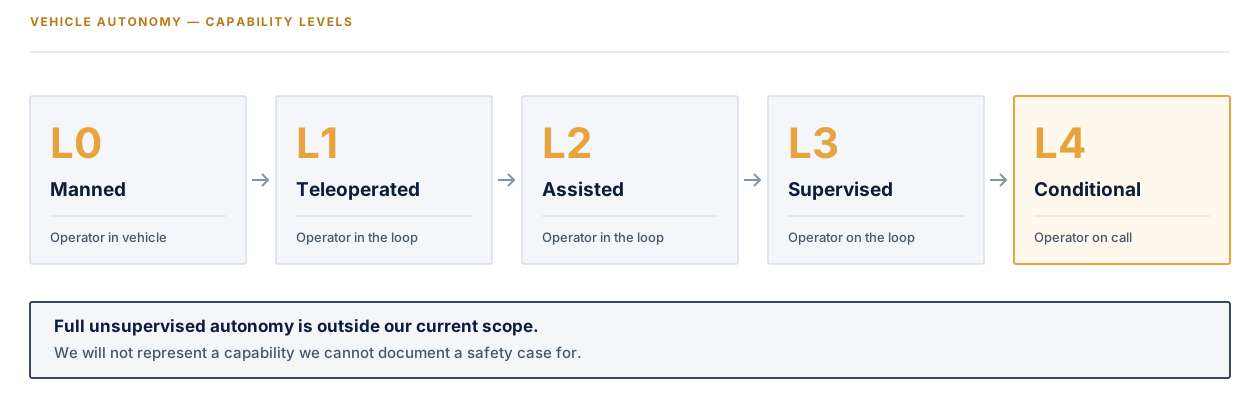
L0
Manned
Baseline vehicle. Kit installed, no driving automation.
Operator in vehicle
Vehicle autonomy
Capability levels
L0
Baseline vehicle. Kit installed, no driving automation.
Operator in vehicle
L1
Remote driving over encrypted link. Continuous human control of steering, throttle, brake.
Operator in the loop
L2
Path keeping, obstacle warning, speed governing, return-to-safe on link loss.
Operator in the loop
L3
Waypoint navigation, follow-me, convoy keeping, obstacle avoidance within a defined operating domain.
Operator on the loop
L4
Mission execution within a defined operational design domain. Degraded-GNSS navigation. Human on call.
Operator on call
Full unsupervised autonomy is outside our current scope. We will not represent a capability we cannot document a safety case for.
Autopilot platform architecture
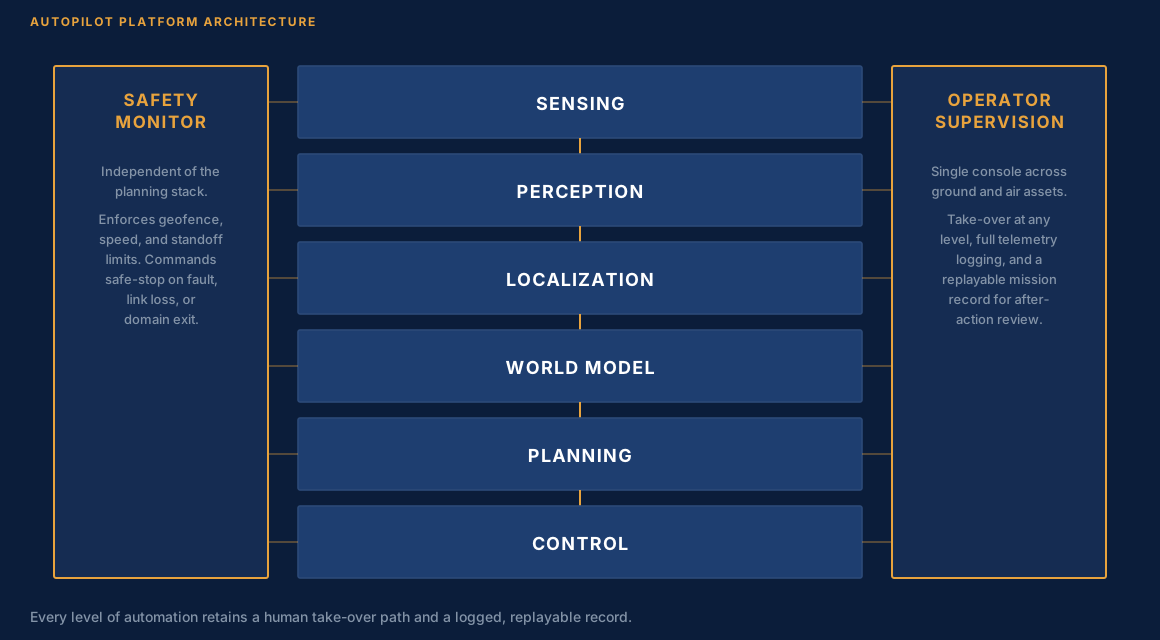
Lidar, radar, EO/IR, inertial, wheel odometry, GNSS where available.
Obstacle detection, terrain classification, traversability assessment.
GNSS-degraded and denied positioning. Visual and inertial dead-reckoning.
Fused local map, tracked objects, confidence and staleness scoring.
Route, path, and behaviour planning within the operational design domain.
Actuation to steering, throttle, braking, and transmission via the platform bus.
Independent of the planning stack. Enforces geofence, speed, and standoff limits, and commands safe-stop on fault, link loss, or domain exit.
Single console across ground and air assets. Take-over at any level, full telemetry logging, and replayable mission record for after-action review.
Every level of automation retains a human take-over path and a logged, replayable record.
How an autonomy program runs
0
Concept of operations, Interface Control Document, power and thermal budget, sensor architecture, safety framework, firm price for the next phase.
6–8 weeks
1
Integrated mission kit on a donor platform. Teleoperated or optionally-manned. Field demonstration to end users.
90 days
2
Waypoint, follow-me, convoy, obstacle avoidance. Operator on the loop. Degraded-GNSS navigation.
12–18 months
3
Line integration, qualification, configuration control at rate, technician training and certification.
9–12 months
4
Operational design domain expansion, safety case, verification, fielding support.
Scoped after Phase 2
Development is customer-funded and milestone-billed. A113 retains its background and developed intellectual property and licenses it by field of use.
Next step
Six to eight weeks, fixed price. You receive the concept of operations, the Interface Control Document, the electrical and thermal budget against your actual platform, a safety framework, and a firm price for the build.
If the study does not earn the next phase, you have learned that for the cost of a study.
Request a scoping study